TV Repairs of Tomorrow: Groundbreaking Trends and Innovations in the Industry
The future of TV repairs is evolving, influenced by artificial intelligence and smart innovations. Service experts are confronted with mastering new skills as smart television technology advances rapidly. Meanwhile, DIY solutions are gaining traction, enabled by smartphone applications and discussion platforms. Green repair methods are increasingly being adopted, advancing sustainable maintenance solutions. As this evolution continues, we should reflect on how they will redefine service standards and customer expectations in the coming years.
The Influence of Smart Technology on TV Repairs
As intelligent technology keeps advancing, its impact on television repairs has grown considerably. Modern televisions, equipped with advanced features and connectivity options, have changed the landscape of repair services. Technicians now encounter a variety of smart functionalities, including streaming capabilities, integrated applications, and network connectivity, all requiring specialized expertise for thorough diagnostics and effective repairs.
In addition, smart technology supports off-site diagnostics, empowering service providers to diagnose issues without an on-site visit. This effectively decreases repair times while simultaneously improving customer satisfaction. Nevertheless, the complexity of smart TVs poses challenges; professionals must consistently refresh their knowledge to keep up with the rapidly evolving technology.
Moreover, the abundance of web-based resources and discussion forums facilitates knowledge sharing among skilled technicians, cultivating a collaborative environment for resolving challenging repair issues. Thus, advanced technology is revolutionizing the TV repair industry, highlighting the need for flexibility and specialized knowledge in an continuously developing landscape.
The Impact of Artificial Intelligence on TV Diagnostics
Artificial intelligence is reshaping TV diagnostics by boosting the reliability of fault identification. Using cutting-edge algorithms, AI can evaluate performance data and pinpoint faults more dependably than standard techniques. Additionally, predictive maintenance solutions enabled by AI can anticipate potential failures, minimizing downtime and repair costs.
Improved Diagnostic Precision
Whereas standard diagnostic techniques commonly lean on technician knowledge, the adoption of artificial intelligence has substantially advanced the precision and effectiveness of TV diagnostics. Artificial intelligence algorithms are capable of processing enormous volumes of data from user submissions, maintenance histories, and hardware behaviors, allowing for exact identification of issues. By employing machine learning methodologies, these systems consistently enhance their diagnostic performance, adapting to new models and technologies as they emerge. This evolution decreases the duration of the diagnostic process and minimizes the risk of human error. Moreover, AI-driven diagnostics can provide technicians with actionable insights, optimizing the repair workflow. As a result, clients experience expedited and more consistent service, dramatically reshaping the approach to TV repairs in an progressively intricate technological setting.
Predictive Maintenance Services
Utilizing the power of artificial intelligence, predictive maintenance systems are transforming TV diagnostics. These advanced systems analyze historical performance data and real-time usage patterns to predict potential failures before they happen. By employing machine learning algorithms, they detect anomalies that could indicate underlying issues, allowing technicians to address problems preemptively. This move from reactive to predictive maintenance reduces downtime and decreases repair costs. Moreover, AI-driven diagnostics boost customer satisfaction by ensuring a seamless viewing experience. As the industry moves forward to embrace these innovations, the integration of predictive maintenance will certainly become standard practice, significantly transforming the landscape of TV repairs and maintenance, while prolonging the lifespan of devices.
DIY Approaches: Tools and Applications for TV Fixes
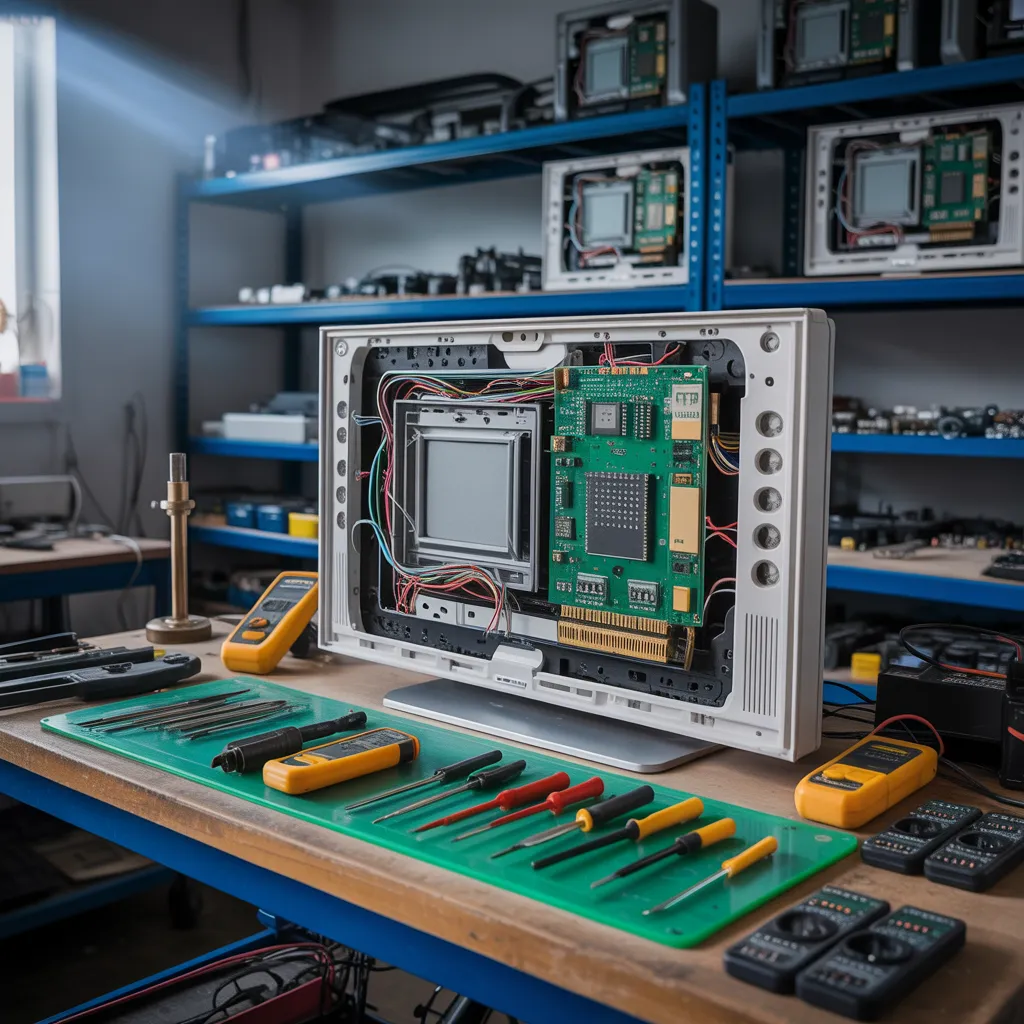
A growing number of individuals are turning to self-service approaches to fixing TVs, due to the widespread availability of dedicated repair tools and smartphone apps. Such advancements enable individuals to address frequent problems without expert help. Various tools, such as multimeters and soldering kits, have become more accessible, empowering home repairers to pinpoint faults efficiently. Smartphone applications provide tutorial videos, detailed instructions, and diagnostic checklists, transforming the repair experience into a more approachable endeavor.
Online communities and social media platforms further enhance the do-it-yourself journey, allowing users to share insights and solutions. With the rise of augmented reality applications, users can visualize repairs in real-time, improving accuracy and confidence. This shift towards DIY repairs not only cuts expenses but also builds a feeling of achievement. As innovation keeps progressing, the world of television repairs is steadily shaped by DIY trends, indicating a profound change in how consumers approach repairs.
Can DIY Methods Be Effective for TV Repairs?
How efficient are DIY methods for TV repairs? The efficiency of DIY methods varies considerably, depending on the type of issue and the individual's technical skill. Numerous typical issues, including small screen irregularities or connection problems, can often be resolved with basic tools and online resources. Those possessing adequate know-how and instruments may competently address faults, possibly reducing service expenses.
Even so, more intricate problems, including, internal hardware failures or intricate software malfunctions, may pose challenges that surpass the average DIYer's skill set. Under these circumstances, improper repairs might bring about further damage, causing higher repair costs or the need for complete replacement. Moreover, the warranty status of a television might be invalidated by unauthorized repairs. When all is considered, while DIY solutions may prove successful for certain situations, prudence and a solid grasp of one's own capabilities remain critical for successful outcomes.
Going Green: Sustainable TV Repair Alternatives
Adopting eco-friendly repair solutions for televisions has gained significant traction as consumers grow more aware of environmental issues. Repair facilities are increasingly embracing sustainable practices, such as employing eco-conscious materials and eco-friendly solvents, which decrease hazardous byproducts. Numerous repair specialists now focus on rehabilitating existing components instead of replacing entire units, prolonging television lifespan and minimizing electronic waste.
Additionally, a number of organizations provide take-back programs, giving consumers to return used televisions for proper recycling. Doing so not only avoids excessive landfill waste but also makes certain that important components are collected and utilized. Consequently, the sector experiences a growth in alliances between recycling facilities and repair shops, advancing a sustainable economic model.
Furthermore, manufacturers are starting to engineer TVs with more straightforward disassembly in mind, enhancing repairability and reducing environmental impact. These developments signify a shared progression towards environmentally friendly practices, bringing the industry in harmony with broader sustainability goals while accommodating the environmentally aware consumer.
DIY versus Professional Repairs: Which Choice Is Best for You?
The growing demand in sustainable repair alternatives has caused many individuals to evaluate the best approach for repairing their TV sets. Deciding between self-repair and expert assistance typically copyrights on personal expertise, self-assurance, and the complexity of the problem. Handling repairs independently can be enticing for those with technical prowess, as they provide financial benefits and personal satisfaction. Despite these benefits, there are inherent risks involved, such as the possibility of damaging the device or causing personal harm.
On the other hand, skilled repair services deliver professionalism and are generally covered by warranties, ensuring that the television is handled correctly and safely. This choice is especially recommended for intricate problems or premium models. Ultimately, the decision copyrights on balancing personal capability with the potential risks and rewards. Buyers need to gauge their practical guide confidence with technology and weigh the long-term outcomes when selecting between DIY solutions and expert repair options.
The Future of TV Repairs? Upcoming Trends and Innovations
As technology keeps advancing, the future of TV repairs is set to undergo substantial shifts driven by progress in intelligent technology and sustainable solutions. Cutting-edge breakthroughs are likely to focus on modular designs, permitting customers to exchange separate components rather than complete units, thus extending the lifespan of their equipment. Furthermore, AR-powered solutions may enable technicians to diagnose issues remotely, supporting more efficient and reliable repair outcomes.
The integration of artificial intelligence (AI) in troubleshooting processes may simplify repairs by evaluating issues and recommending fixes grounded in historical data. Additionally, a heightened priority on green practices may encourage repair companies to implement sustainable materials and recycling efforts.
As the industry evolves, consumers can expect enhanced service options and improved accessibility to repair resources, fundamentally reshaping how repairs are handled in this fast-evolving technological landscape.
Common Questions and Answers
How Much Should You Expect to Pay for TV Repair?
A standard TV repair cost spans from $50 to $300, influenced by the television model and the type of malfunction. Labor and parts greatly influence the overall expense, shaping the total repair expenditure.
What Typical Problems Can Be Fixed in Older TV Models?
Frequent problems in older TV models include power failures, screen flickering, audio malfunctions, and connectivity issues. Technicians often address these by replacing capacitors, fixing circuit boards, or updating internal components to ensure the television operates reliably once again.
How Long Does a Standard TV Repair Take?
A standard TV repair typically takes one to three hours on average, depending on the issue's complexity and parts availability. Complex issues may need more time, most notably when specific components have to be ordered.
Is It Worth Repairing a Broken TV?
Deciding whether to repair a broken TV typically comes down to comparing repair costs against replacement costs. As a rule of thumb, if repair expenses surpass half the cost of a new model, replacing the unit may be the wiser decision.
What Warranties Are Available for TV Repairs?
Multiple warranty types for TV repairs are available, including warranties from manufacturers, extended coverage plans, and third-party coverage. These warranty types typically vary in length and coverage, giving buyers coverage for manufacturing defects and repair expenses for their TV sets.